- About
- Events
-
Summer Programs
Summer Programs
Volunteer IsraelGrades 9-12 | 15 Days Volunteer IsraelGrades 9-12 | 15 Days Volunteer IsraelGrades 9-12 | 15 Days Volunteer IsraelGrades 9-12 | 15 Days Volunteer IsraelGrades 9-12 | 15 Days Volunteer IsraelGrades 9-12 | 15 Days Volunteer IsraelGrades 9-12 | 15 Days Volunteer IsraelGrades 9-12 | 15 Days Volunteer IsraelGrades 9-12 | 15 Days Volunteer IsraelGrades 9-12 | 15 Days - Get Involved
-
International Convention
International Convention
-
Resources
Resources
-
Meet the Team
Connection
Intersectionality and Judaism
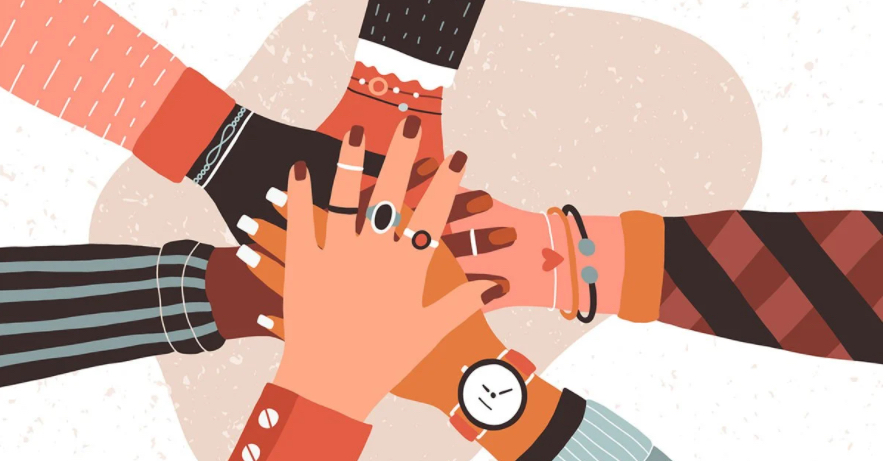
Hine ma Tov umanaim shevet achim gam yachad: a Hebrew verse (Psalm 133) translated as "Behold how good and how pleasing / for people to sit together in unity." A core belief of Judaism is social justice, the responsibility of giving back to those in need and standing up for human rights. This points to the idea of intersectionality, a framework that has been spotlighted lately amid many current societal issues.
What is intersectionality? Intersectionality was created almost 30 years ago by Kimberlé Crenshaw, a lawyer and civil rights advocate who invented this term to describe the layers of oppression she faced as a Black woman. It is the idea that all social issues connect and that many of these social issues shape the layers of our identity. To take action to address a problem, we must reflect on how it links to other topics.
When taking it to the streets to march in protest against the climate crisis, people can't leave racial inequality out of the demonstration because of the overlying concept of environmental racism. When discussing the local impacts of homelessness, we need to discuss how to improve mental health awareness and de-stigmatize suicide prevention. When holding conversations about anti-Semitism, the privilege that white-identifying Jewish people have needs to be acknowledged, and the community must uplift the voices of Jews of color.
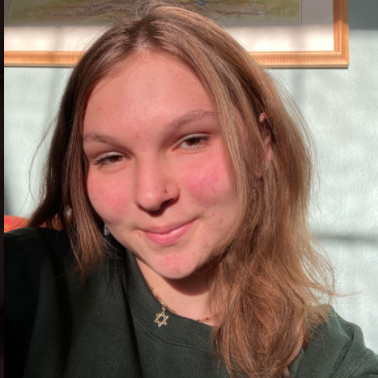
This brings us to the concept of identity. Intersectionality can additionally describe the many layers of oppression that an individual faces, including race, religion, sexual orientation, gender identity, socio-economic status, disability, et cetera. As a white, Jewish woman, I have personally faced anti-semitism and sexism in my life. However, I can't and will never experience racism. Jews of color confront another aspect of oppression, and this can often become complicated when experiencing discrimination from the Jewish community and anti-semitism from the Black community.
In Judaism, the themes of Tikkun Olam ("to repair the world") and acts of mitzvot (conscious deeds of kindness) emphasize the underlying presence of social justice and allyship in our religion. Acts of mitzvah and allyship don't give us "brownie points"; instead, it is a continuous part of our Jewish people's responsibility. Furthermore, mitzvah and allyship acts are not transactional: people should expect nothing in return for standing up for others.
In our BBYO community, we can apply the idea of intersectionality to our local Stand Up causes and philanthropy initiatives. Similarly, people can connect this idea to other programs relating to the AZA folds of social action/education and the BBG folds of social action/community service. When organizing a program concerning a Stand-Up cause, how can we expand education to other social issues? When choosing an organization to donate to, how can we hold ourselves accountable so that giving back is an ongoing part of our personal lives and beyond?
Intersectionality is a concept that can be difficult to grasp fully, as it links to identity, privilege, discrimination, advocacy, and so on. It can be intimidating to think about how intersectionality's interconnected nature results in the inability to "solve" a single social issue because of inequality overlapping systems. However, our religion and culture are centered around complicated human problems and discussing and debating them.
As young Jewish leaders, let's use this framework of intersectionality to commit to social justice. "Behold how good and how pleasing / for people to sit together in unity."
Explore More Stories

Vestibulum hendrerit ornare augue, nec hendrerit tortor suscipit at.
Maecenas eget commodo odio, non interdum lorem. Phasellus quis tellus dignissim, ornare velit et, auctor augue. Suspendisse volutpat orci sed velit dignissim, eu consectetur ipsum posuere. Morbi nibh diam, facilisis sit amet lectus quis, fermentum congue erat. Proin eros lectus, posuere id luctus in, blandit vitae metus. Morbi at eros sed tortor accumsan vulputate eu vel ex. Cras gravida fermentum est et imperdiet. Integer eu elit ac elit faucibus finibus.


Etiam eget nunc vitae urna maximus dignissim eu vel est. Nunc non tortor arcu
Phasellus mauris quam, varius sit amet erat in, volutpat maximus purus. Etiam eu orci suscipit, semper enim ut, fermentum erat. Duis vel eleifend orci. Suspendisse ultrices erat sed lacus luctus varius. Ut lobortis ipsum a mattis bibendum. Praesent sit amet odio nisi. Integer elementum ante et lorem gravida, quis facilisis risus lacinia. Nullam eleifend convallis lorem quis euismod. Aenean quis sagittis sapien, at sagittis ipsum.

Connection
Suspendisse ultrices interdum porta. Morbi ante nunc
Aliquam pharetra leo cursus urna semper luctus non a elit. Etiam tristique ante in lectus maximus, a hendrerit justo iaculis. Duis hendrerit arcu turpis, vel finibus nisi sodales in. Donec ut felis ex. Quisque blandit mauris ante, sed egestas massa vulputate et. Integer maximus, ipsum non faucibus tincidunt, diam lacus mattis mauris, et porttitor augue dui eget erat. Nullam scelerisque dolor in velit pulvinar egestas. In hac habitasse platea dictumst. Nam in purus ornare, feugiat massa eu, viverra orci. Suspendisse efficitur ex eget consectetur tempor. In pulvinar ligula ut auctor rhoncus. Maecenas tempus eros tortor, non convallis elit scelerisque non. Duis sagittis molestie luctus.