- About
- Events
-
Summer Programs
Summer Programs
Volunteer IsraelGrades 9-12 | 15 Days Volunteer IsraelGrades 9-12 | 15 Days Volunteer IsraelGrades 9-12 | 15 Days Volunteer IsraelGrades 9-12 | 15 Days Volunteer IsraelGrades 9-12 | 15 Days Volunteer IsraelGrades 9-12 | 15 Days Volunteer IsraelGrades 9-12 | 15 Days Volunteer IsraelGrades 9-12 | 15 Days Volunteer IsraelGrades 9-12 | 15 Days Volunteer IsraelGrades 9-12 | 15 Days - Get Involved
-
International Convention
International Convention
-
Resources
Resources
-
Meet the Team
Spotlight
Sigd: A Holiday By Ethiopian-Jews And For All Jews

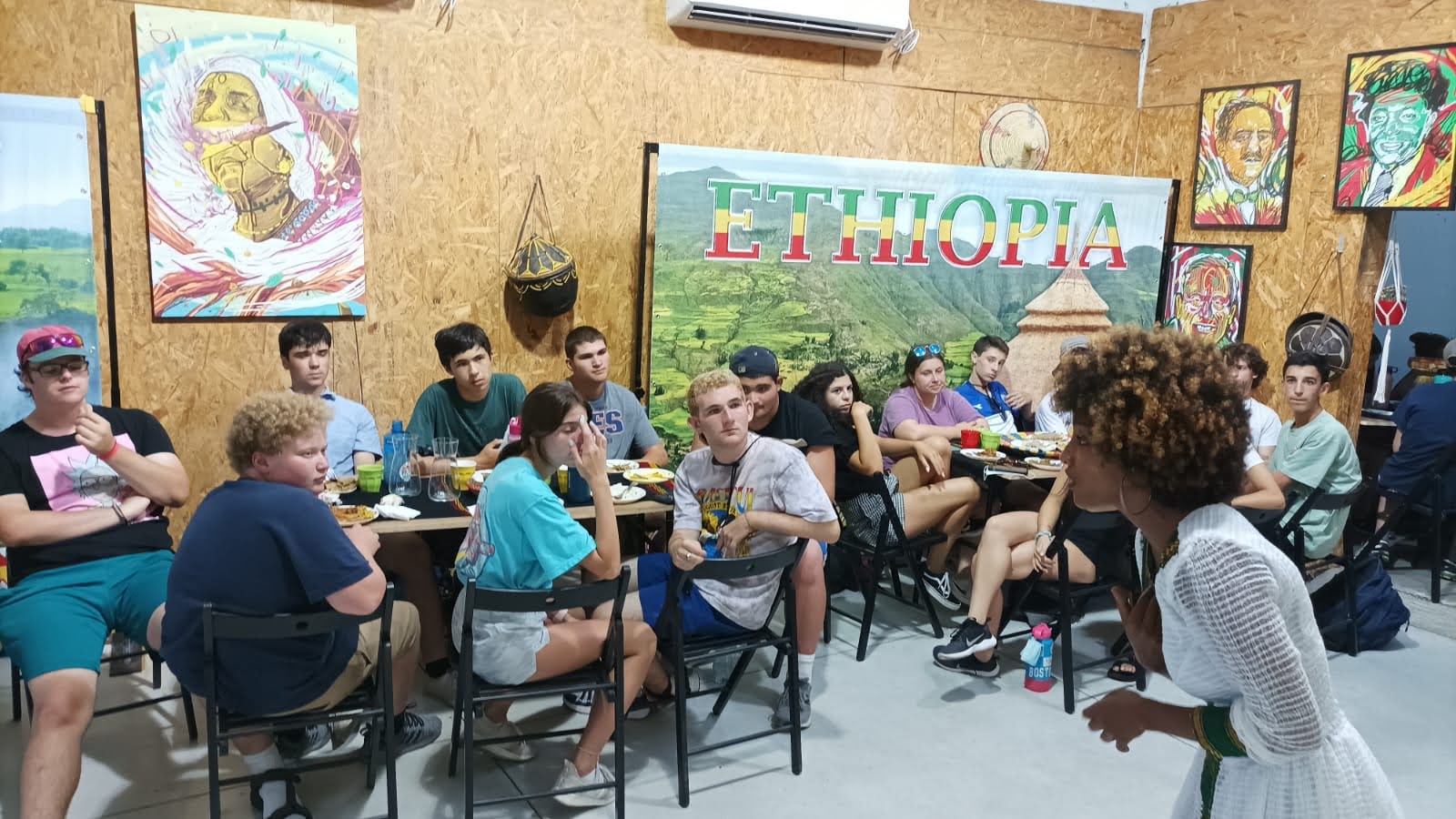
This past summer at Kallah, I had the opportunity to learn about various Jewish traditions, customs, and holidays I wasn’t previously familiar with. One night, during an all-camp activity, we split into groups, where we rotated to different stations and learned about the Jewish holidays. At each station, we experienced a glimpse of each holiday through hands-on activities. While I had already known of most holidays from celebrating them back home, there was one I hadn’t heard of before. After learning about this holiday, I was intrigued and made sure to mark it on my phone’s calendar. At the same time, I couldn’t help but think about how many other Jewish teens and adults didn’t know about this holiday and its significance in a culturally rich and diverse yet simultaneously unrecognized community.
Sigd is an Ethipoian-Jewish holiday observed 50 days after Yom Kippur, on the 29th of Cheshvan in the Hebrew calendar. This year, it began the evening of November 22 and concluded the evening of November 23. The Ethiopian- Jewish community, better known as Beta Israel (House of Israel), has celebrated the holiday since the 15th century. Like Yom Kippur, the community spends this important day fasting, praying, and eventually feasting. While repentance is emphasized during Yom Kippur, the Sigd holiday tells us that in order to be deserving of pilgrimage to Jerusalem, fasting on Yom Kippur and self-improvement is the bare minimum. Seven weeks after Yom Kippur, during which people enlighten themselves with individual atonement, the counting stops, signaling a return to the Yom Kippur atmosphere, but this time, as a collective community of those who have undergone deeper purification.
On the morning of Sigd, people go to a nearby river to cleanse themselves and put on holiday garments. Everyone gathers together as the priestly class (Kohanim) take out the Orit (Torah) and sing. Eventually, everyone begins climbing up a hill or mountain, carrying the Orit with them, while some carry stones on their heads and backs. Once the group reaches the top, they begin the service, consisting of prayer, rejoice, and recounting the story of Moses’ ascent to Mount Sinai when receiving the Torah. At the end of the service, the shofar is blown and people say, “just as we have merited celebrating the holiday this year, so may we merit celebrating it next year in Jerusalem.” After the service, everyone walks back down the hill and breaks their fast with a huge feast.
Sigd primarily recalls the giving of the Torah on Mount Sinai as the foundation of an agreement with G-d, and also commemorates the renewal of the agreement by the exiled Jews who returned to Israel. Before Beta Israel left Ethiopia, they longed to return back to their Jewish homeland. The holiday serves as an opportunity to remind these people of the need to stay committed to mitzvot, Torah, and Jerusalem. Lastly, this day is an opportunity for people to recognize their wrongdoings through fasting and prayer, just like Yom Kippur. Today, Beta Israel now gathers in Israel, to walk up a mountain called Armon HaNatziv, which directly overlooks Jerusalem. Only as recently as 2008 did Israel recognize Sigd as a national holiday. While this is a great step towards national recognition, it goes to show how it was overlooked for several years by the general jewish community in Israel, just how it was by me.
What is the importance of this holiday, especially in modern times? Celebrating Sigd honors the Jews who faced endless struggles and died, all while migrating from Ethiopia to their freedom. When given the opportunity to come, they immediately set forth on the journey to return to the Jewish homeland. As a global Jewish community, everyone should take time to learn about the Beta Israel and their journey to Israel, as well as the issues of discrimination and racism they continue to face among others. Many Ethiopian Jews did not make it to Israel, so as a community we must honor those who we’ve lost.
Explore More Stories

Vestibulum hendrerit ornare augue, nec hendrerit tortor suscipit at.
Maecenas eget commodo odio, non interdum lorem. Phasellus quis tellus dignissim, ornare velit et, auctor augue. Suspendisse volutpat orci sed velit dignissim, eu consectetur ipsum posuere. Morbi nibh diam, facilisis sit amet lectus quis, fermentum congue erat. Proin eros lectus, posuere id luctus in, blandit vitae metus. Morbi at eros sed tortor accumsan vulputate eu vel ex. Cras gravida fermentum est et imperdiet. Integer eu elit ac elit faucibus finibus.


Etiam eget nunc vitae urna maximus dignissim eu vel est. Nunc non tortor arcu
Phasellus mauris quam, varius sit amet erat in, volutpat maximus purus. Etiam eu orci suscipit, semper enim ut, fermentum erat. Duis vel eleifend orci. Suspendisse ultrices erat sed lacus luctus varius. Ut lobortis ipsum a mattis bibendum. Praesent sit amet odio nisi. Integer elementum ante et lorem gravida, quis facilisis risus lacinia. Nullam eleifend convallis lorem quis euismod. Aenean quis sagittis sapien, at sagittis ipsum.

Connection
Suspendisse ultrices interdum porta. Morbi ante nunc
Aliquam pharetra leo cursus urna semper luctus non a elit. Etiam tristique ante in lectus maximus, a hendrerit justo iaculis. Duis hendrerit arcu turpis, vel finibus nisi sodales in. Donec ut felis ex. Quisque blandit mauris ante, sed egestas massa vulputate et. Integer maximus, ipsum non faucibus tincidunt, diam lacus mattis mauris, et porttitor augue dui eget erat. Nullam scelerisque dolor in velit pulvinar egestas. In hac habitasse platea dictumst. Nam in purus ornare, feugiat massa eu, viverra orci. Suspendisse efficitur ex eget consectetur tempor. In pulvinar ligula ut auctor rhoncus. Maecenas tempus eros tortor, non convallis elit scelerisque non. Duis sagittis molestie luctus.