- About
- Events
-
Summer Programs
Summer Programs
Volunteer IsraelGrades 9-12 | 15 Days Volunteer IsraelGrades 9-12 | 15 Days Volunteer IsraelGrades 9-12 | 15 Days Volunteer IsraelGrades 9-12 | 15 Days Volunteer IsraelGrades 9-12 | 15 Days Volunteer IsraelGrades 9-12 | 15 Days Volunteer IsraelGrades 9-12 | 15 Days Volunteer IsraelGrades 9-12 | 15 Days Volunteer IsraelGrades 9-12 | 15 Days Volunteer IsraelGrades 9-12 | 15 Days - Get Involved
-
International Convention
International Convention
-
Resources
Resources
-
Meet the Team
Identity
Parashat Vayetze: Divine Purpose, Growth, Justice, and Dreams

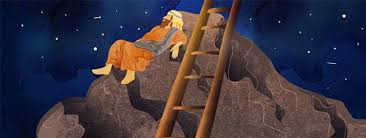
This week's Parsha Vayetze focuses on themes of divine purpose, growth through challenges, justice, and even dreams. Vayetze means, “and he left,” and that is where our rich story starts. Jacob, the third Jewish Patriarch, leaves his hometown of Beersheba in Israel’s Negev desert and starts the journey to Charan, the land of his fathers, as his twin brother Esau had been planning to kill him for some time. He travels and travels until he falls asleep and has a dream. This famous dream consists of a ladder that connects heaven and earth (known as Jacob's ladder), with angels climbing up and down it. G-d then appears and makes the promise that the place where he’s sleeping has been given to his descendants. Jacob wakes up and continues on his journey to Charan.
There are many different interpretations of what Jacob's ladder dream meant. Overall, many agree that it represents the connection between G-d and man, as well as the connection between Earth and Heaven. The term Jacob’s ladder is used metaphorically, representing a “path” or “way” to enlightenment and a higher level of being. Others believe that the ladder is a model for prayer. Prayer connects our Earth with G-d in heaven, as a ladder connects the ground with an area higher up. Prayers also consist of multiple sections, similar to rungs on the ladder. As you step higher on the rungs, the higher the prayers are, and the highest rung is believed to be the Amidah prayer, where you are in G-d’s direct presence as you speak to him.
Jacob makes it to Charan and is staying with his uncle Laban when he agrees to let Jacob marry his true love at first sight, Rachel, who is Laban's daughter, if Jacob works for him for seven years. Rachel was described as truly beautiful, which is uncommon to be written in the Torah, showing why Jacob loved her so much. The wedding arrives, but without anyone noticing, Laban gives his daughter Leah instead of Rachel. Leah was also described, but instead of as beautiful, she was depicted as having “tender eyes” because of her crying. She cried because she hated her fate as she was marrying someone she didn’t love who just so happened to be Jacobs' evil brother Esau (the same Esau who is also known as the reason why Jacob left in the first place), and for so long prayed and prayed to G-d to change her fate. G-d agreed, and that was why Leah was married to Jacob.
Now, he doesn’t realize this until the morning, and naturally then marries Rachel, too, agreeing to another seven years of labor for Laban. This is interesting as fate is almost never changed in the Torah; fate is fate, but Leah’s prayers were so strong that, like a “perfectly poised arrow,” they reached straight to G-d, and her fate was changed.
This is when Jacob acquires twelve children: seven from Leah, two from Rachel's handmaid, Bilhah, whom she gave to Jacob, two from Leah’s handmaid Zilpah, and then finally one from Rachel. After fourteen years of labor, Jacob has done, and he wants to go back home. The Parsha ends as Jacob finally makes his way back to the Holy Land.
The story of Jacob in Parsha Vayetze is a reminder of the resilience, faith, and perseverance needed to navigate life’s challenges. Jacob’s journey from his dream to his trek to Charan to his years of labor all provide significance and different beliefs and inspire us, in the end, to keep climbing the ladder of life.
Shabbat Shalom,
Sam Toledano, Nassau Suffolk Region
Explore More Stories

Vestibulum hendrerit ornare augue, nec hendrerit tortor suscipit at.
Maecenas eget commodo odio, non interdum lorem. Phasellus quis tellus dignissim, ornare velit et, auctor augue. Suspendisse volutpat orci sed velit dignissim, eu consectetur ipsum posuere. Morbi nibh diam, facilisis sit amet lectus quis, fermentum congue erat. Proin eros lectus, posuere id luctus in, blandit vitae metus. Morbi at eros sed tortor accumsan vulputate eu vel ex. Cras gravida fermentum est et imperdiet. Integer eu elit ac elit faucibus finibus.


Etiam eget nunc vitae urna maximus dignissim eu vel est. Nunc non tortor arcu
Phasellus mauris quam, varius sit amet erat in, volutpat maximus purus. Etiam eu orci suscipit, semper enim ut, fermentum erat. Duis vel eleifend orci. Suspendisse ultrices erat sed lacus luctus varius. Ut lobortis ipsum a mattis bibendum. Praesent sit amet odio nisi. Integer elementum ante et lorem gravida, quis facilisis risus lacinia. Nullam eleifend convallis lorem quis euismod. Aenean quis sagittis sapien, at sagittis ipsum.

Connection
Suspendisse ultrices interdum porta. Morbi ante nunc
Aliquam pharetra leo cursus urna semper luctus non a elit. Etiam tristique ante in lectus maximus, a hendrerit justo iaculis. Duis hendrerit arcu turpis, vel finibus nisi sodales in. Donec ut felis ex. Quisque blandit mauris ante, sed egestas massa vulputate et. Integer maximus, ipsum non faucibus tincidunt, diam lacus mattis mauris, et porttitor augue dui eget erat. Nullam scelerisque dolor in velit pulvinar egestas. In hac habitasse platea dictumst. Nam in purus ornare, feugiat massa eu, viverra orci. Suspendisse efficitur ex eget consectetur tempor. In pulvinar ligula ut auctor rhoncus. Maecenas tempus eros tortor, non convallis elit scelerisque non. Duis sagittis molestie luctus.